
AGROFOS EXTRA

PRODUCT PROFILE
Mode of action: Inhibits acetylcholinesterase, disrupting nerve-impulse transmission and paralysing the pest. Second active ingredient: a sodium-channel modulator causing continuous nerve-cell excitation and pest paralysis.
Activity: Contact and ingestion action through food intake.
Targets: Aphids, thrips, sunn pest, thrips and bugs.
Application timing: Spraying during the growing season.
Resistance: Belongs to the AChE inhibitors group; the risk of resistance development is high: do not rely solely on this product during the season; alternate with products having different modes of action.
Note: The hazard level for bees is very high — do not use during flowering.
CROPS AND APPLICATION RATES
- Wheat — Aphids, thrips, sunn pest: 0,2-0,5 L/ha
- Cotton — Thrips: 0,2 L/ha
- Cotton — True bugs: 0,07-1,0 L/ha
BENEFITS
- The target of action is defined: inhibits acetylcholinesterase.
- The permitted scope of application is defined: the product is used only on wheat and cotton and against the specified targets, preventing excessive and incorrect treatments.
- The active-ingredient load can be calculated in advance: the rate is set according to its content in the formulation, making the quantity applied per hectare easy to control.
- Two different mechanisms of action are combined in one product, providing additional options for resistance management.
- When mixed with water, the emulsifiable concentrate forms a stable emulsion and spreads evenly over the leaf.
- Specific recommendations are available for the mode-of-action group: alternating with products that have a different mechanism helps maintain long-term efficacy.
APPLICATION GUIDANCE
Working solution: half-fill the tank with clean water, start agitation, add the product and top up with water; maintain agitation and use the mixture on the day it is prepared. Add the concentrate as a premix with a small amount of water, rather than directly to the tank.
Weather and timing: optimal conditions are morning or evening, an air temperature of +15…+25 °C and wind speeds below 3–4 metres per second; treatment before rain or at temperatures above +30 °C is not recommended. Because of the high risk to bees, do not apply during flowering or while bees are foraging.
Water quality: the preferred pH of the working solution is 5,0–6,5; adding an organosilicone wetting agent (adjuvant) is recommended.
Compatibility: do not mix with alkaline products (lime sulphur or Bordeaux mixture). Before combining with other products or fertilizers, a small-volume test is recommended: do not mix if precipitation or separation occurs.
Storage: keep in the original tightly closed packaging in a dry, ventilated and dark warehouse; do not freeze and protect from direct sunlight; keep away from children, food and animal feed.
Classification: Category: insecticide and acaricide; chemical class: organophosphorus compound (AChE) and pyrethroid; risk to bees: very high.
Characteristics
Insecticide / acaricide
Chlorpyrifos
500 g/L
Cypermethrin
100 g/L
Formulation
EC — emulsifiable concentrate
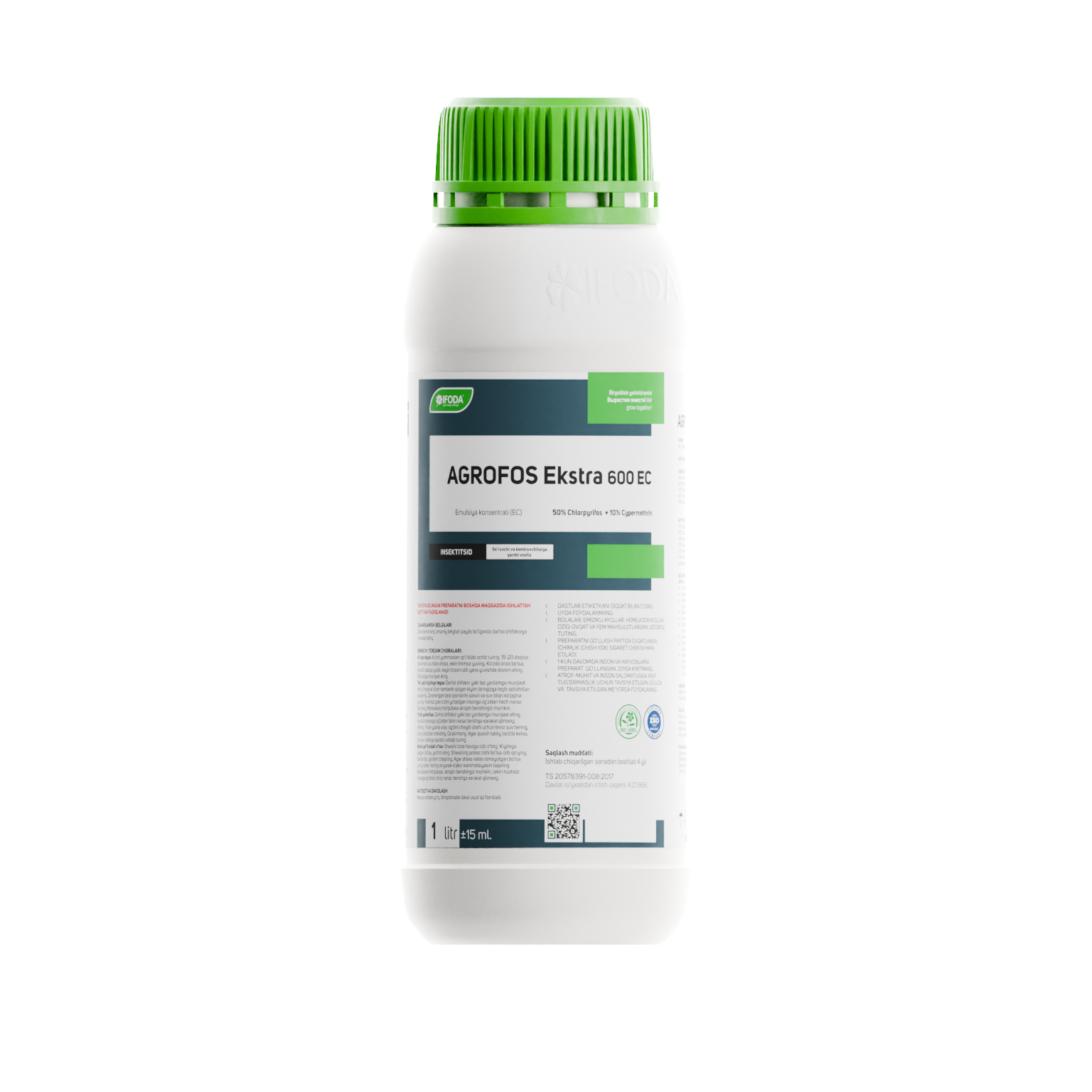
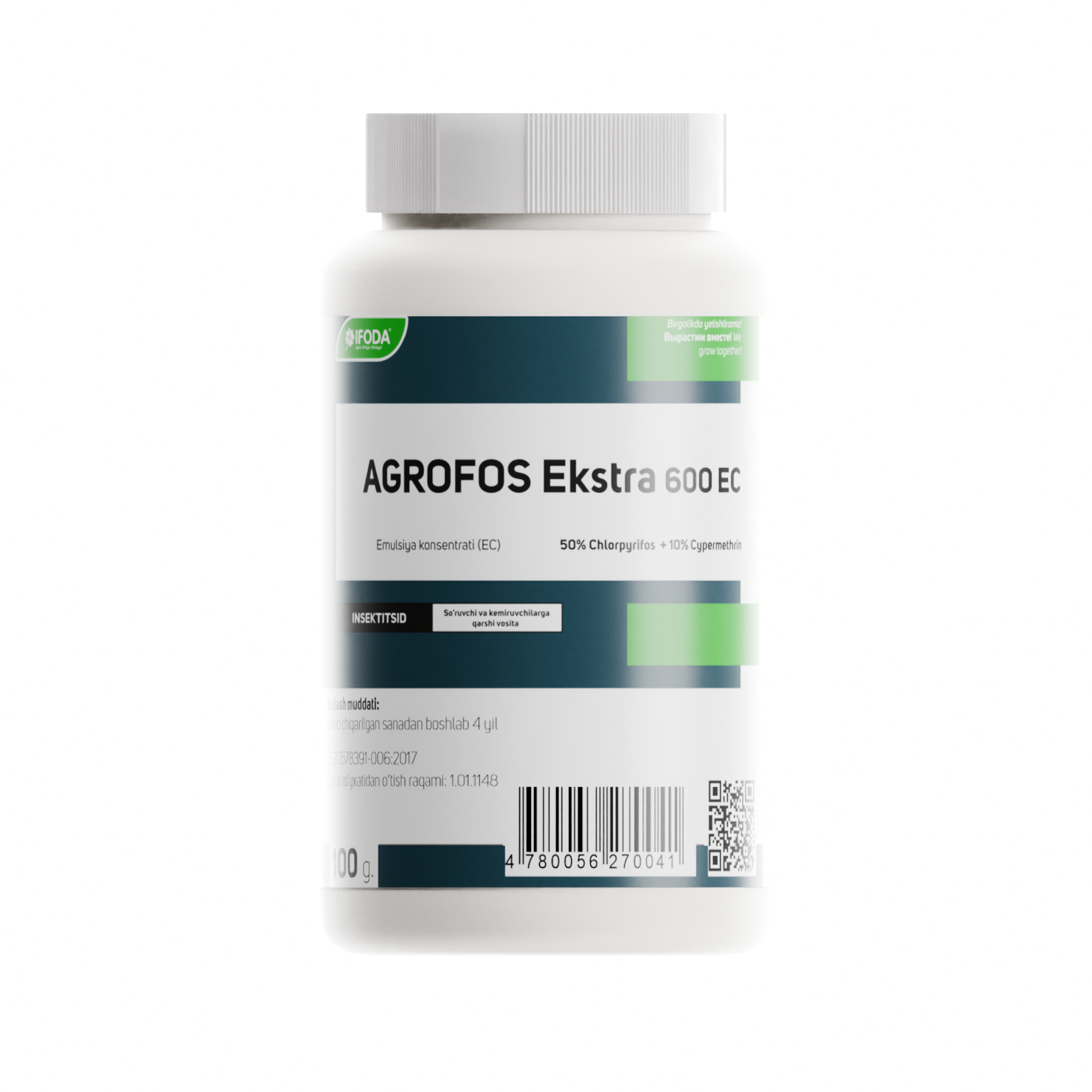
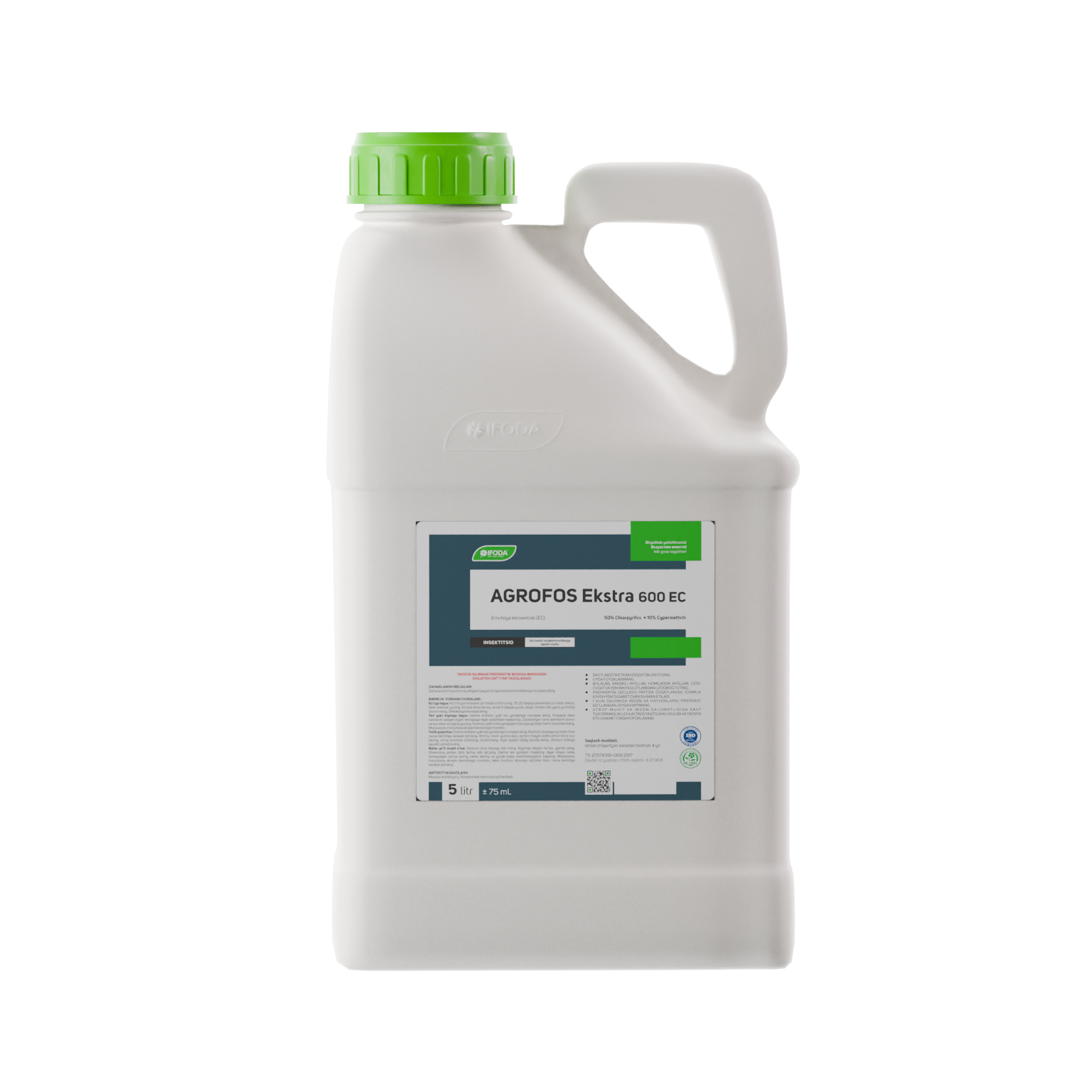
An insecticide and acaricide against pests of wheat and cotton.
Chemical class
chlorpyrifos: Organophosphate (AChE); cypermethrin: Pyrethroid
