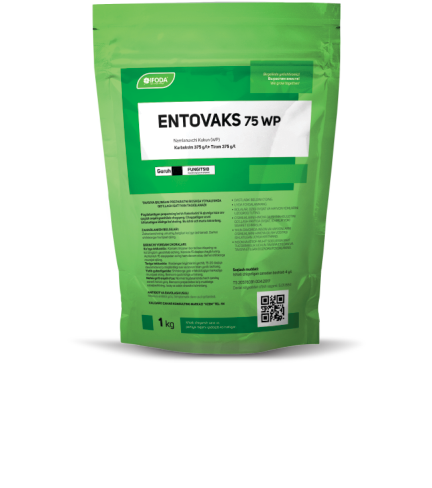
ENTOVAKS
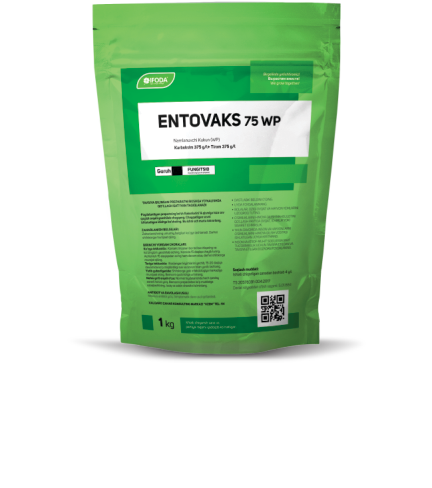

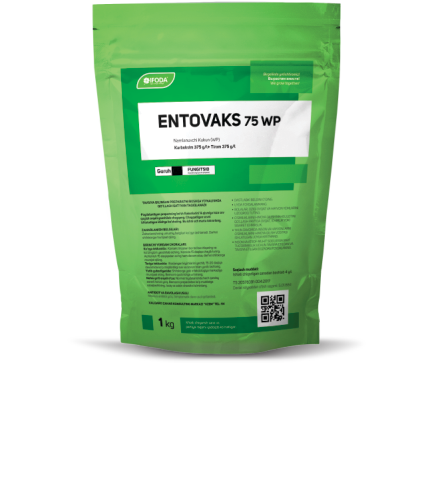
PRODUCT PROFILE
Mode of action: Inhibits succinate dehydrogenase (mitochondrial complex II), disrupting fungal respiration. Second active ingredient: dithiocarbamate; reacts with multiple thiol (–SH)-containing enzymes in fungal cells (multisite contact action).
Targets: Loose smut, common bunt and root rot.
Application timing: Before sowing the seed.
Resistance: The risk of resistance development is moderate: limit applications per season and alternate mode-of-action groups.
Note: The hazard level for bees is moderate.
CROPS AND APPLICATION RATES
- Winter wheat (Tríticum) — Loose smut and common bunt: 2,5-3,0 kg/t
- Cotton (Gossypium) — Root rot: 4,0-5,0 kg/t
BENEFITS
- The target of action is defined: inhibits succinate dehydrogenase (mitochondrial complex II), disrupting fungal respiration.
- The permitted scope of application is defined: the product is used only on winter wheat and cotton and against the specified targets, preventing excessive and incorrect treatments.
- Two different mechanisms of action are combined in one product, providing additional options for resistance management.
- The wettable powder forms a suspension in water.
- Limiting the number of applications per season and rotating groups help maintain efficacy.
APPLICATION GUIDANCE
Compatibility: do not mix with alkaline products (lime sulphur or Bordeaux mixture). Before combining with other products or fertilizers, a small-volume test is recommended: do not mix if precipitation or separation occurs.
Storage: keep in the original tightly closed packaging in a dry, ventilated and dark warehouse; protect from moisture; keep away from children, food and animal feed.
Classification: Category: seed treatment; chemical class: carboxamide (SDHI) and dithiocarbamate (multisite); risk to bees: medium.
Characteristics
Seed treatment product
Carboxin
375 g/kg
Thiram
375 g/kg
Formulation
WP — wettable powder
A seed treatment for winter wheat and cotton.
Chemical class
carboxin: Carboxamide (SDHI); thiram: Dithiocarbamate (multisite)