
RIMIDA
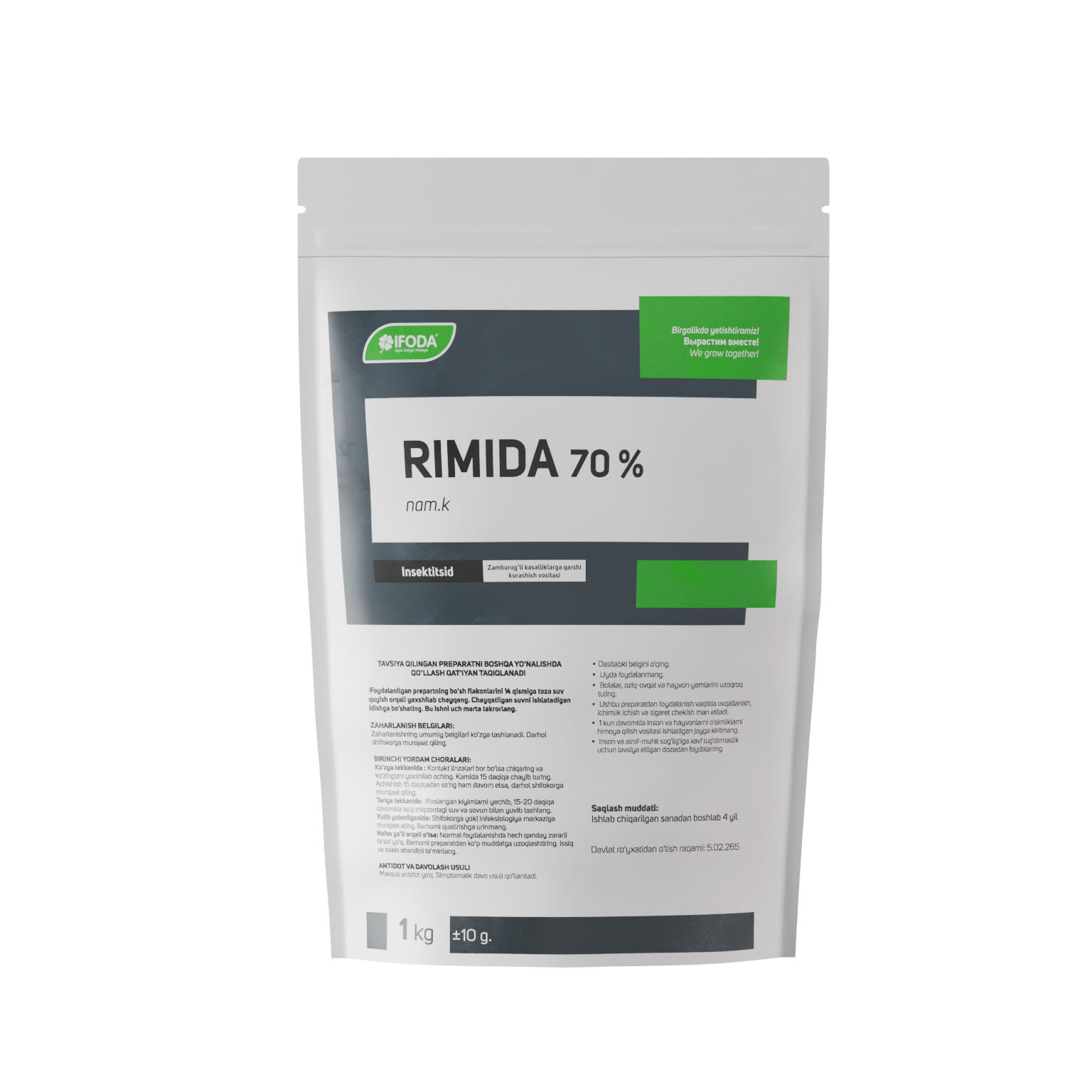

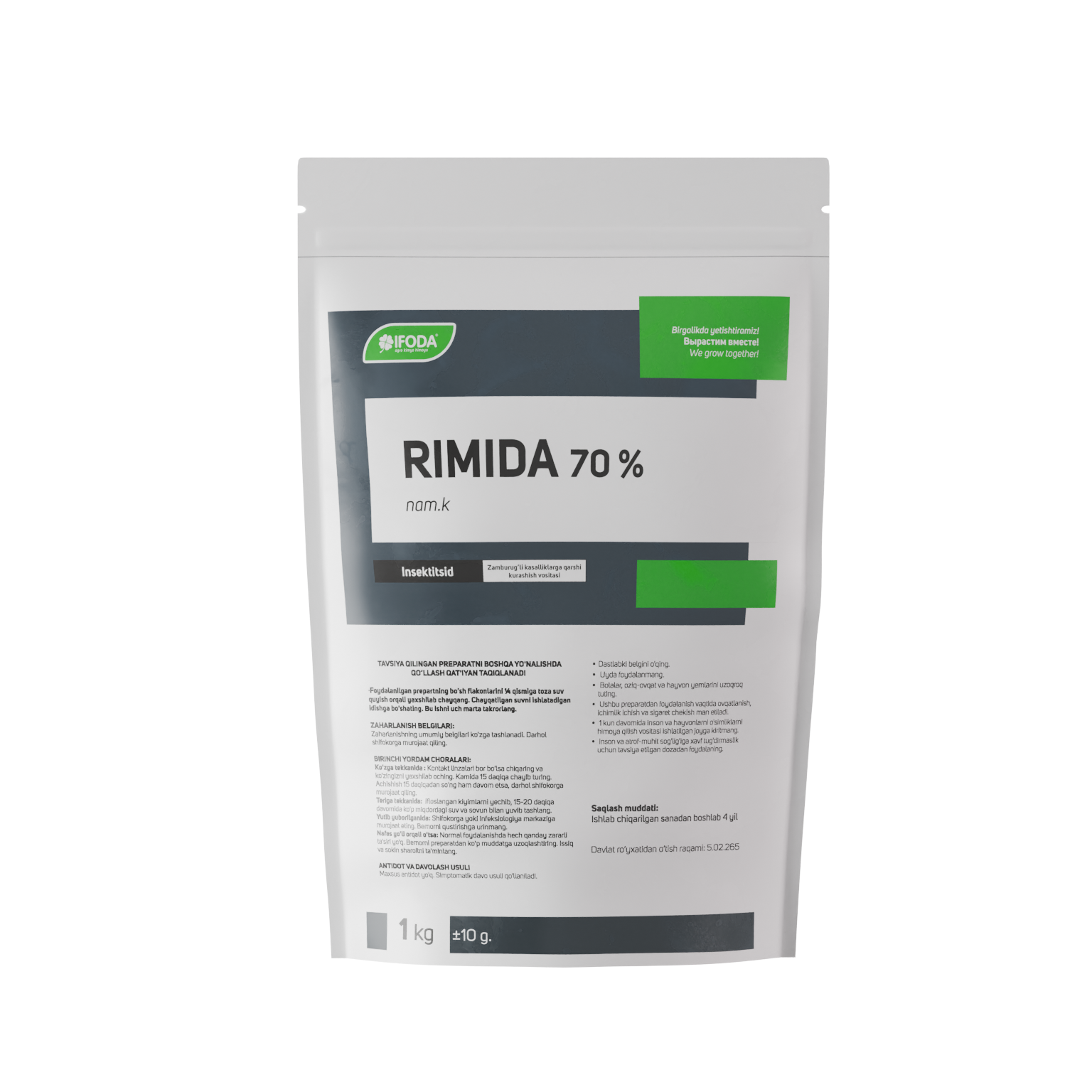
PRODUCT PROFILE
Mode of action: A nicotinic acetylcholine receptor agonist causing excessive nervous-system excitation (systemic action against sucking pests).
Activity: Enters the plant and moves through its tissues (systemic action); against sucking pests.
Targets: Aphids and thrips.
Resistance: Belongs to the neonicotinoids group; the risk of resistance development is high: do not rely solely on this product during the season; alternate with products having different modes of action.
Note: The hazard level for bees is very high — do not use during flowering.
CROPS AND APPLICATION RATES
- Cotton (Gossypium spp) — Aphids (Aphidoidea), thrips (Thysanoptera): 5,0 kg/t
BENEFITS
- The target of action is defined: nicotinic acetylcholine receptor agonist.
- The permitted scope of application is defined: the product is used only on cotton and against the specified targets, preventing excessive and incorrect treatments.
- Systemic action enables the active ingredient to move within plant tissues.
- The wettable powder forms a suspension in water.
- Specific recommendations are available for the mode-of-action group: alternating with products that have a different mechanism helps maintain long-term efficacy.
APPLICATION GUIDANCE
Compatibility: do not mix with alkaline products (lime sulphur or Bordeaux mixture). Before combining with other products or fertilizers, a small-volume test is recommended: do not mix if precipitation or separation occurs.
Storage: keep in the original tightly closed packaging in a dry, ventilated and dark warehouse; protect from moisture; keep away from children, food and animal feed.
Classification: Category: seed treatment; chemical class: neonicotinoid; risk to bees: very high.
Characteristics
Seed treatment product
Imidacloprid
700 g/kg
Formulation
WP — wettable powder
A seed treatment for cotton.
Chemical class
imidacloprid: Neonicotinoid